How to Treat Frozen Shoulder: Causes, Recovery Timeline, and Physiotherapy Tips
Understanding the '50-year-old Shoulder'
1 December 2025
Understanding Frozen Shoulder: Why It Happens and How to Heal
If you’ve ever woken up with a stiff, painful shoulder that just won’t move the way it used to, you might be dealing with frozen shoulder, also known as adhesive capsulitis. It’s a common condition that can make simple tasks like combing your hair or reaching for something on a high shelf surprisingly difficult.
What Is Frozen Shoulder?
Frozen shoulder occurs when the shoulder joint capsule, the soft tissue surrounding the joint, becomes inflamed and tight, forming thick bands of scar-like tissue called adhesions. This restricts movement and causes significant pain, especially when you try to lift or rotate your arm.
Understanding the Pathophysiology of Frozen Shoulder
Frozen shoulder, also known as adhesive capsulitis, can be grouped into two main types: primary and secondary, depending on what causes it.
1. Primary (Idiopathic) Frozen Shoulder
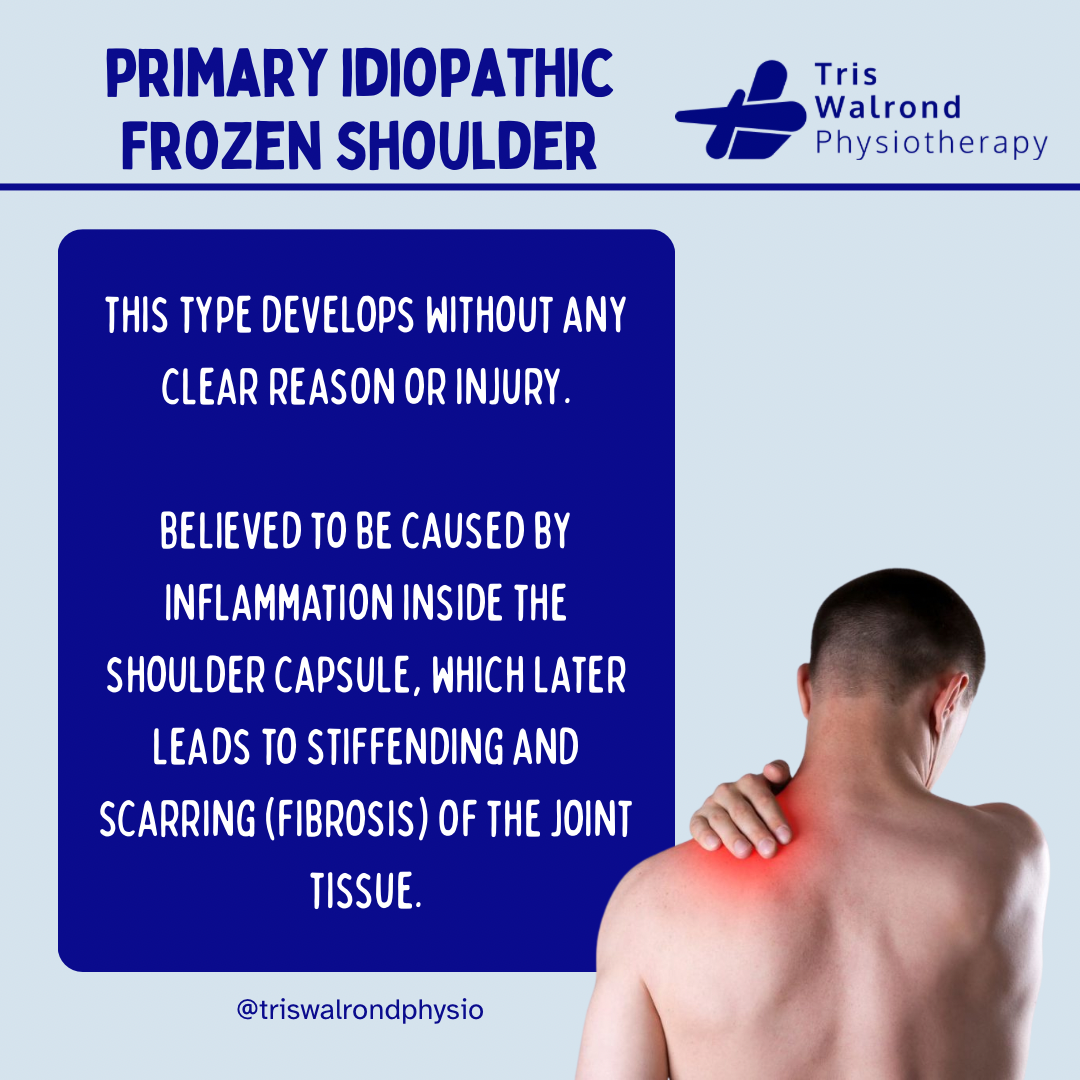
This type develops without any clear reason or injury. It’s called idiopathic, meaning the exact cause is unknown. Doctors believe it happens because of inflammation inside the shoulder capsule, which later leads to stiffening and scarring (fibrosis) of the joint tissue.
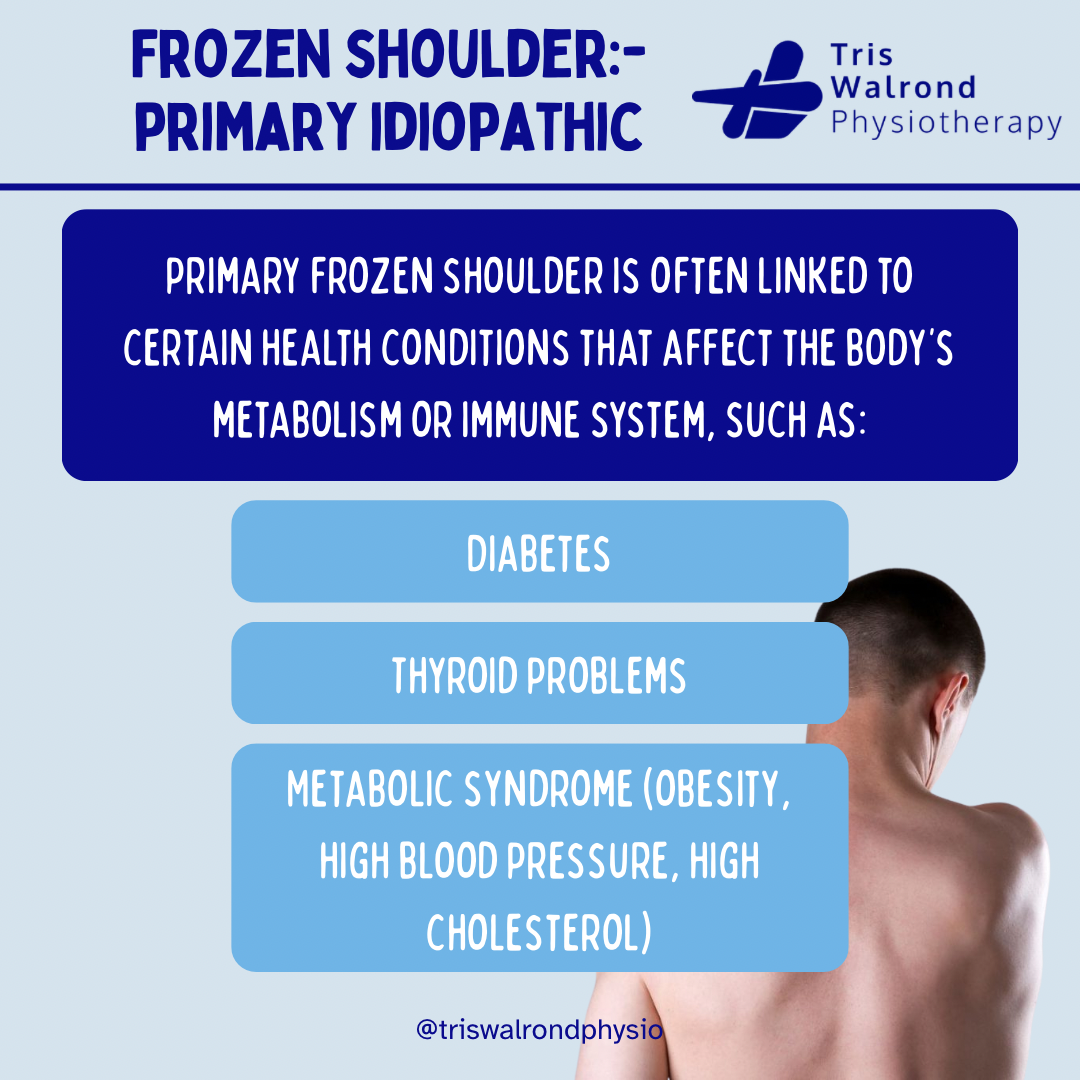
Primary frozen shoulder is often linked to certain health conditions that affect the body’s metabolism or immune system, such as:
Diabetes mellitus (especially insulin-dependent diabetes)
Thyroid problems (overactive or underactive thyroid)
Metabolic syndrome (obesity, high blood pressure, or high cholesterol)
Dupuytren’s contracture (a hand condition that causes thickened connective tissue)
These conditions may make the shoulder more likely to react with inflammation and tightening.
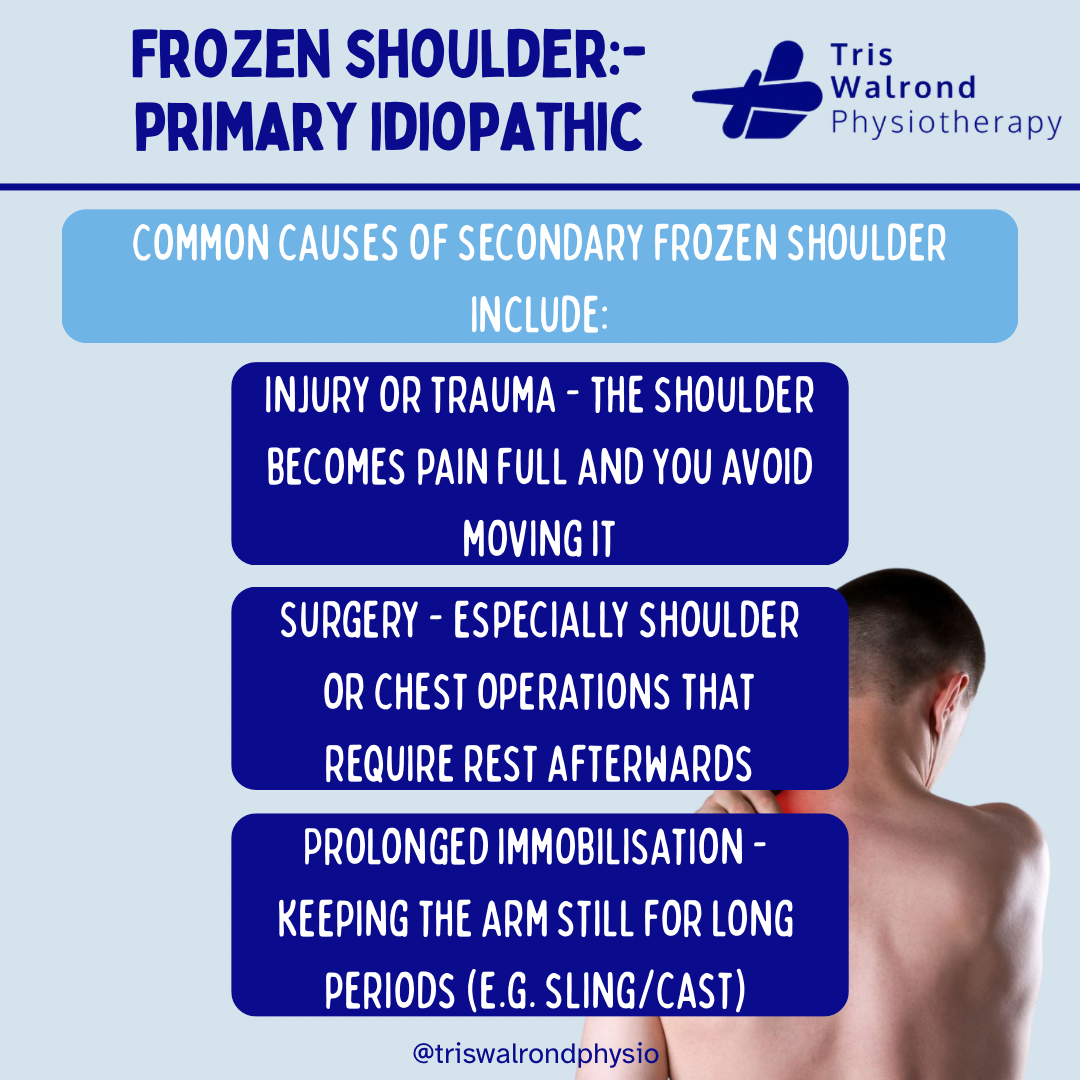
2. Secondary Frozen Shoulder
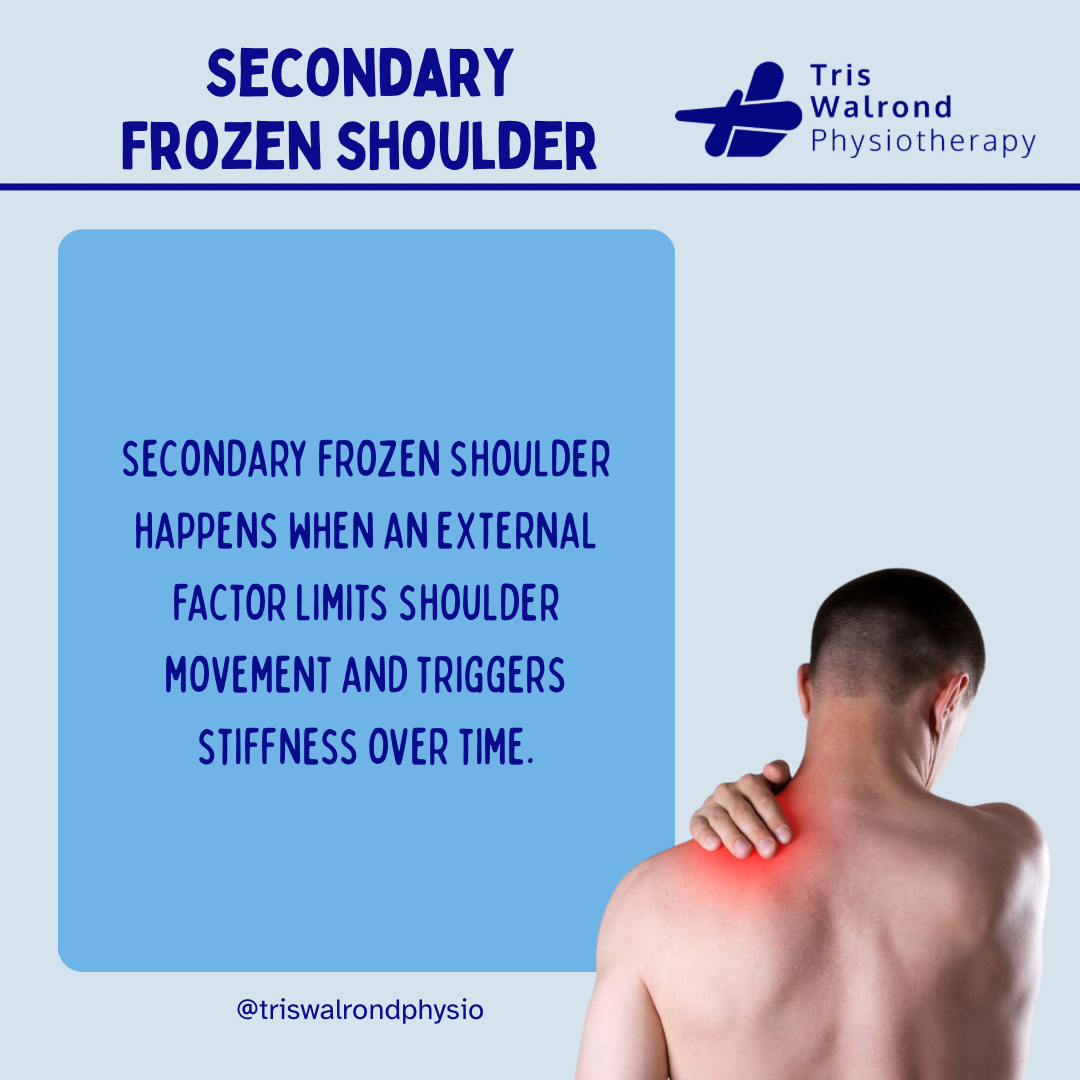
Secondary frozen shoulder happens when an outside factor limits shoulder movement and triggers stiffness over time. Common causes include:
Injury or trauma – the shoulder becomes painful and you avoid moving it
Surgery – especially shoulder or chest operations that require rest afterward
Prolonged immobilization – keeping the arm still for a long period, such as in a sling or cast
People with diabetes or thyroid disease are also more prone to develop this form.
What Happens Inside the Shoulder
Even though the exact process isn’t fully understood, frozen shoulder seems to follow a pattern involving inflammation first, followed by thickening and tightening of the shoulder capsule.
Inflammatory Stage: The lining of the shoulder joint becomes inflamed, especially in an area called the rotator interval. This causes pain and limits movement.
Fibrotic Stage: Over time, the capsule becomes thick, tight, and less flexible. The coracohumeral ligament often thickens, and the overall joint space shrinks.
Tissue Changes: The inflammation triggers certain body chemicals (like cytokines and growth factors) that cause fibroblasts—cells that make connective tissue—to produce too much collagen, leading to scar-like stiffening.
Under the Microscope: In early stages, doctors see inflammation (synovitis) in the capsule. Later, this changes to fibrous tissue build up, which restricts the shoulder’s normal movement.
In Simple Terms
Frozen shoulder starts with painful inflammation, then progresses to tightness and scarring inside the joint capsule. This combination makes it hard to move the shoulder, but with time, treatment, and gentle movement, most people eventually regain their mobility.
Natural History of Frozen Shoulder
Frozen shoulder typically lasts 6–36 months (and occasionally longer) and progresses through three overlapping phases. Each stage is characterised by changing levels of pain and stiffness.
Stage 1: Painful Phase (Pain-Predominant Phase)
Duration: 2–9 months Features:
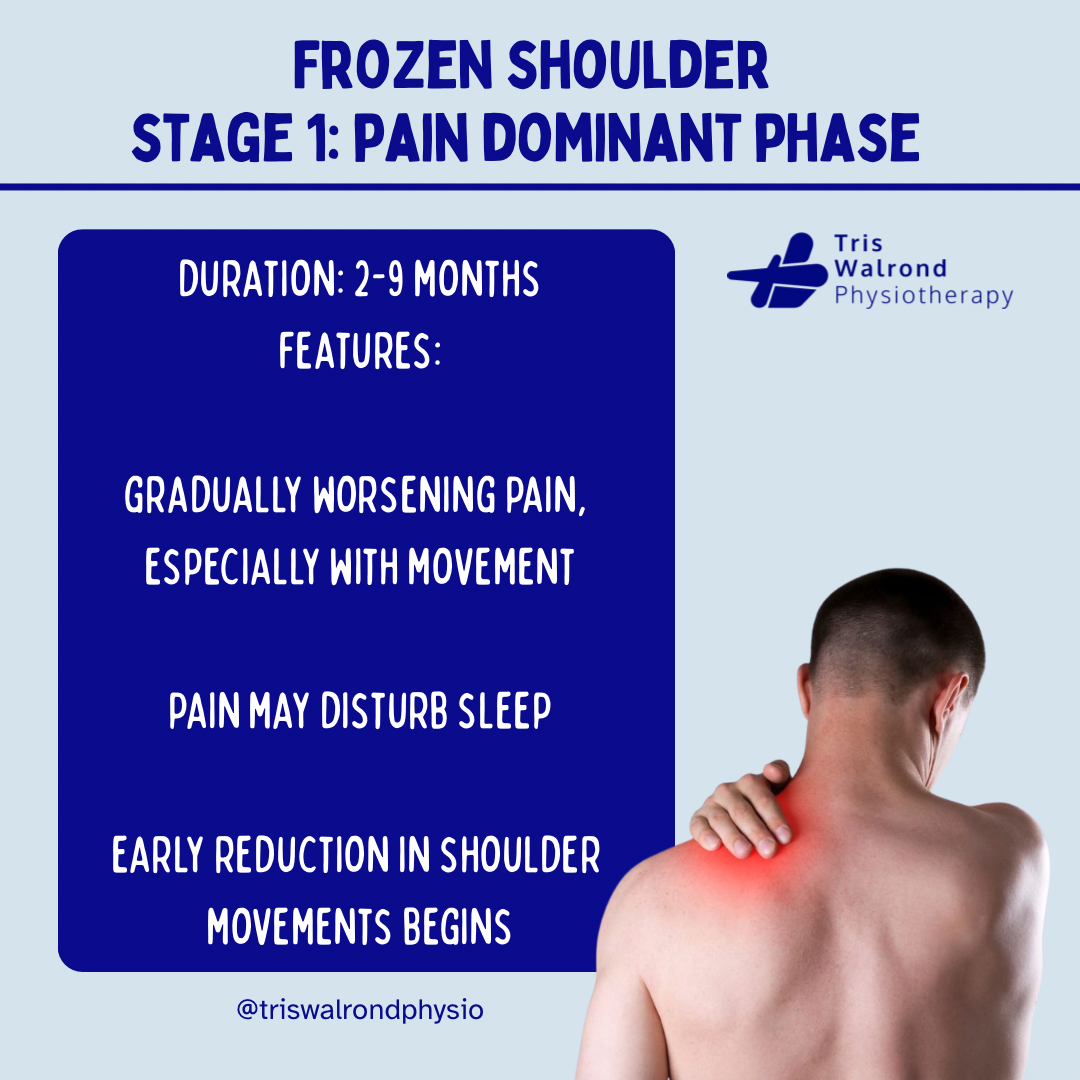
Gradually worsening pain, especially with movement
Pain may disturb sleep
Early reduction in shoulder movement begins
Stage 2: Stiffness Phase (Stiffness-Predominant Phase)
Duration: 4–12 months Features:
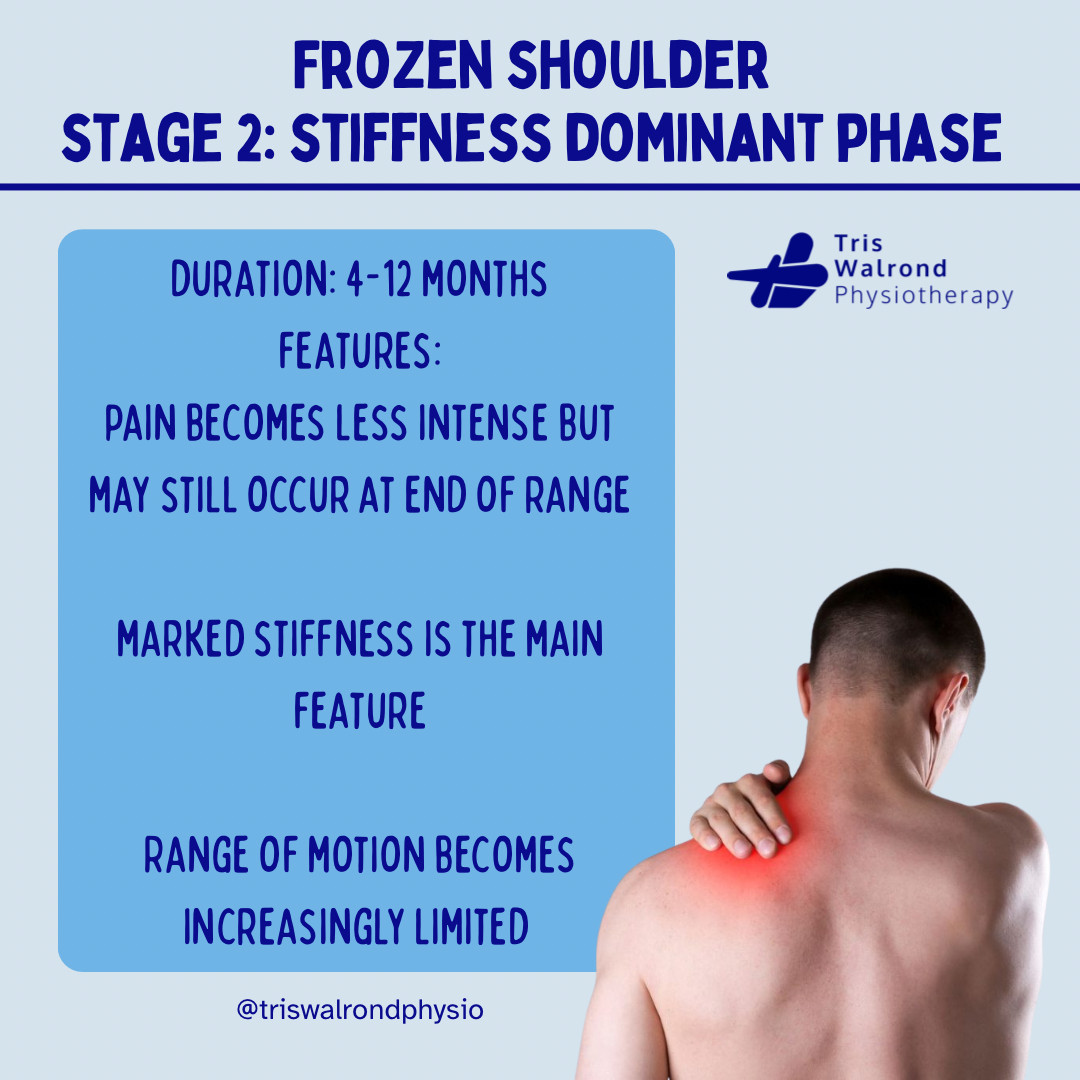
Pain becomes less intense but may still occur at the end of movement
Marked stiffness is the main feature
Range of movement becomes increasingly limited
Stage 3: Resolution Phase
Duration: 12–42 months Features:
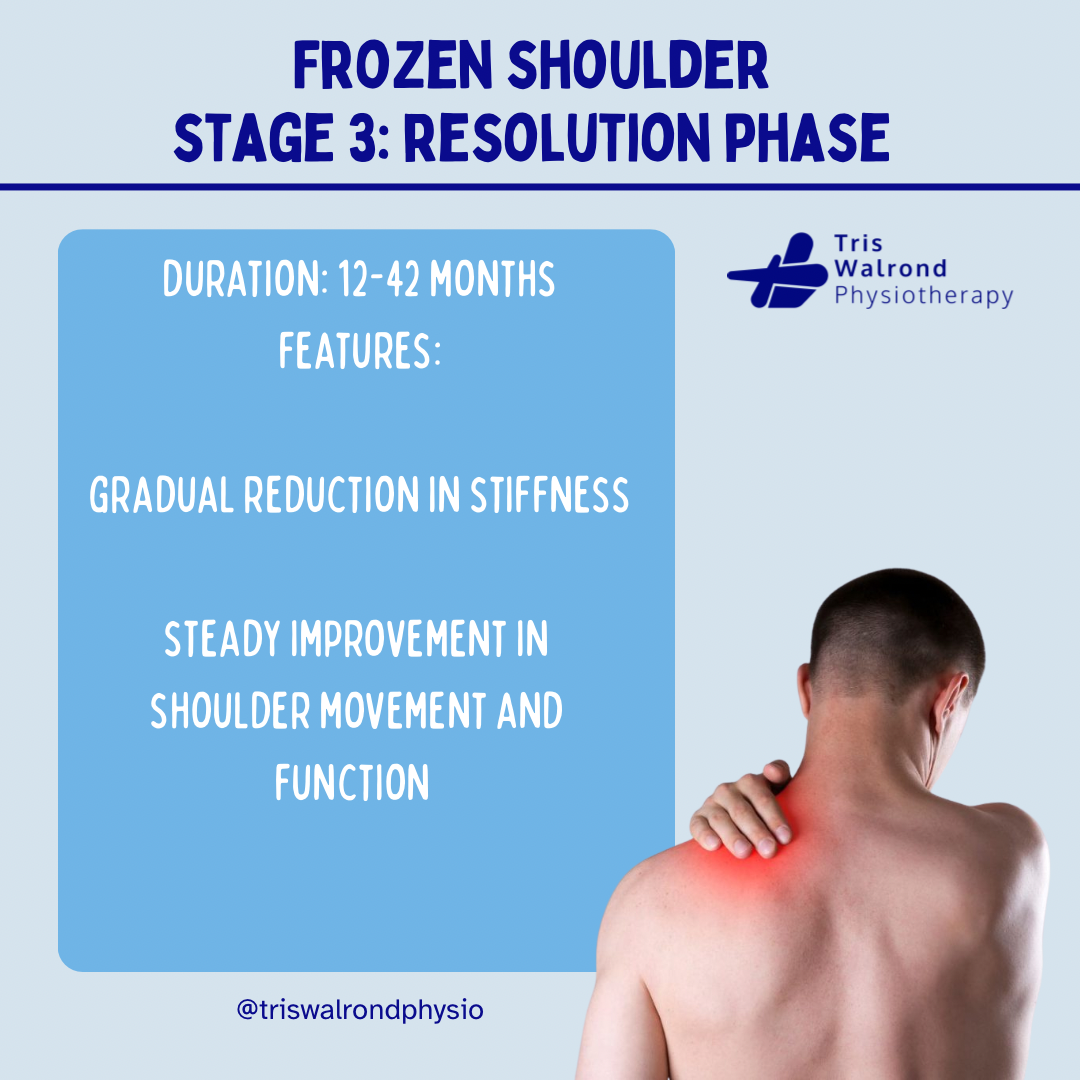
Gradual reduction in stiffness
Steady improvement in shoulder movement and function
Treatment
Frozen shoulder can be treated in several ways, and most people improve over time. Treatment usually starts with simple, non-invasive options, and only moves to more advanced procedures if symptoms don’t settle.
1. First-Line (Non-Invasive) Treatments
Pain Relief
Medicines such as paracetamol or a short course of anti-inflammatory tablets (NSAIDs) may help ease pain, as long as they are safe for you to take.
Physiotherapy
Physio plays an important role throughout all stages of frozen shoulder. Treatment may include:
Education and advice about the condition
A personalised exercise programme to maintain and gradually restore movement
Heat therapy to relax the shoulder
Electrotherapy options
Acupuncture, which some people find helpful for pain
Corticosteroid Injection
A steroid injection into the shoulder joint can reduce inflammation and pain, making exercises easier. Research shows that having an injection earlier in the process may lead to better results.
2. Further Treatment Options (If Symptoms Persist)
If pain and stiffness continue despite physiotherapy and injections, there are more advanced options your specialist may consider:
Manipulation Under Anaesthesia (MUA)
While you are under anaesthetic, the surgeon gently moves the shoulder to help loosen the tight capsule and improve movement.
Arthroscopic Capsular Release
A keyhole surgery where the surgeon carefully releases the tight parts of the shoulder capsule to restore mobility.
Key Message
With early guidance, tailored exercises, and patience, most people make a full recovery. If you’re unsure where to start, a physiotherapist can help build a plan that fits your stage of frozen shoulder.
Book an appointment today to help reduce pain, restore movement and increase function.