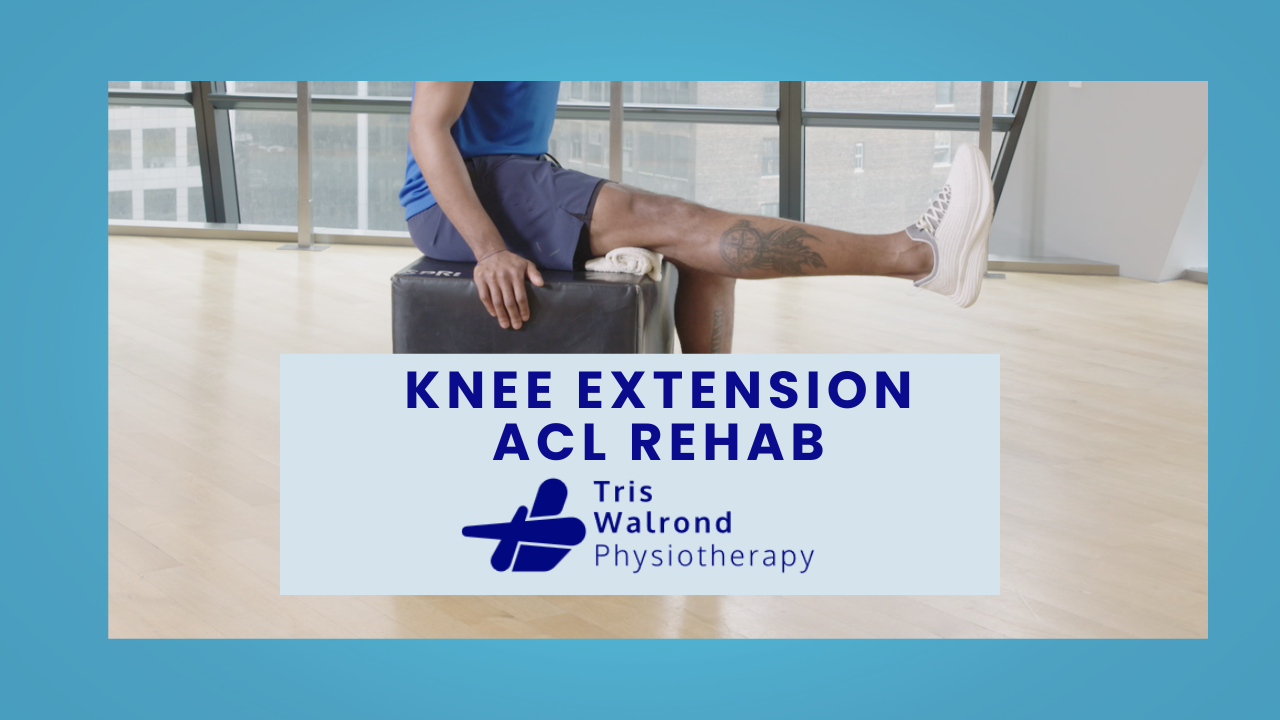
The Importance of Regaining Knee Extension After ACL Reconstruction
Why knee extension can make or break your ACL rehab progress
25 November 2025
Why Regaining Full Knee Extension After ACL Surgery Is Critical
When it comes to ACL rehabilitation, one milestone stands above the rest in the early stages: regaining full knee extension. It’s far more important than many people realise, and delaying this can create challenges that become progressively harder to overcome.
As physiotherapists, we often say: “Extension first, everything else second.” Here’s why.
What Is Terminal Knee Extension?
Terminal knee extension (TKE) refers to the final few degrees of straightening your knee, ideally matching the extension of your non-injured side. For most people, this is 0 degrees, though individuals with hypermobility may naturally achieve a few degrees beyond that. While this range may seem minimal, TKE is essential for normal walking mechanics, optimal quadriceps strength, and overall knee stability.
After ACL surgery, it’s very common to lose this final bit of extension due to several factors, including:
Post-operative swelling, which physically blocks the joint from straightening
Protective muscle guarding or pain, causing the body to hold the knee slightly bent
Quadriceps inhibition, where the quad muscles struggle to activate properly
Scar tissue formation, especially at the back of the knee
Fear of loading or straightening the joint, which leads to avoiding the end range
When these factors combine, they often lead to what we call extension lag, where you attempt to straighten your knee but it remains slightly flexed.
While it may look like a small deficit - just a few degrees - those missing degrees can significantly alter your gait, change how you load your leg, and affect long-term movement patterns.
What Happens When You Don’t Regain Full Knee Extension?
When full knee extension is limited, a cascade of problems can follow. Many of which can slow recovery and create long-term movement issues.
1. Your gait becomes abnormal and inefficient Without the ability to fully straighten the knee, you can’t achieve a normal stride. This leads to limping or altered walking mechanics, which then reinforce poor movement patterns that take time and effort to correct. Over time, compensations develop in the hips, lower back, and even the opposite leg, increasing the risk of secondary injuries.
2. Swelling persists Full extension helps the knee function as a natural pump, moving fluid out of the joint. When the knee stays slightly bent, swelling tends to hang around, slowing healing and making movement more uncomfortable.
3. Quadriceps activation becomes impaired The quadriceps muscle can only contract fully when the knee reaches full extension. If you can’t straighten the knee, quad activation drops significantly, leading to greater muscle loss at a stage where maintaining strength is critical. This weakness affects every part of rehab, including walking, squatting, running, jumping, and later return-to-sport activities.
4. Joint loading becomes altered A flexed knee changes how force is distributed through the joint, often increasing stress on the patellofemoral joint (the kneecap). This can contribute to anterior knee pain and hinder progress in strengthening exercises.
5. Strength, power, and performance are compromised From early rehab to high-level athletic tasks, limited extension reduces efficiency and makes it harder to generate power during running, jumping, and change-of-direction movements.
Why Is Extension Hard to Get Back?
Several common post-operative habits and misunderstandings contribute to difficulty regaining extension:
Resting with a pillow under the knee
It may feel comfortable, but it positions the knee in slight flexion and teaches the joint to remain there. Over time, this makes achieving full extension significantly harder.
Not performing exercises frequently enough
Extension gains come from small, consistent efforts throughout the day, not from occasional sessions. Frequency beats intensity during this stage of recovery.
Relying on passive stretching instead of quad activation
Simply pushing the knee down isn’t as effective as engaging the quadriceps to actively achieve extension. Your quads must learn to control that end range, not just be forced into it.
When Should You Be Concerned?
A key clinical guideline: If full knee extension isn’t achieved by 4–6 weeks post-surgery, it’s time to reassess your approach.
Delays beyond this point make it increasingly difficult to restore normal movement and may lead to long-term stiffness or altered mechanics. Early intervention ensures smoother progress throughout the rest of rehabilitation.
Bottom Line
Restoring full knee extension is the foundation of successful ACL rehabilitation. It sets the stage for normal walking, reduces swelling, supports proper muscle activation, and protects the knee from future issues. Prioritising this early through consistent exercises, good positioning, and active quad engagement will spare you months of frustration and keep your recovery on the right track.
If you’re struggling to regain full knee extension after ACL reconstruction, or want guidance to make sure you’re on the right track. Professional support can make all the difference.
Physiotherapy can help you:
Restore full knee extension safely and effectively
Reduce swelling and pain
Improve quadriceps activation
Build strength and confidence throughout your rehab
Prevent long-term movement issues
Book your physiotherapy appointment today and take the next step toward a stronger recovery.
📞 07891539880
📧 triswalrondphysio@gmail.com